
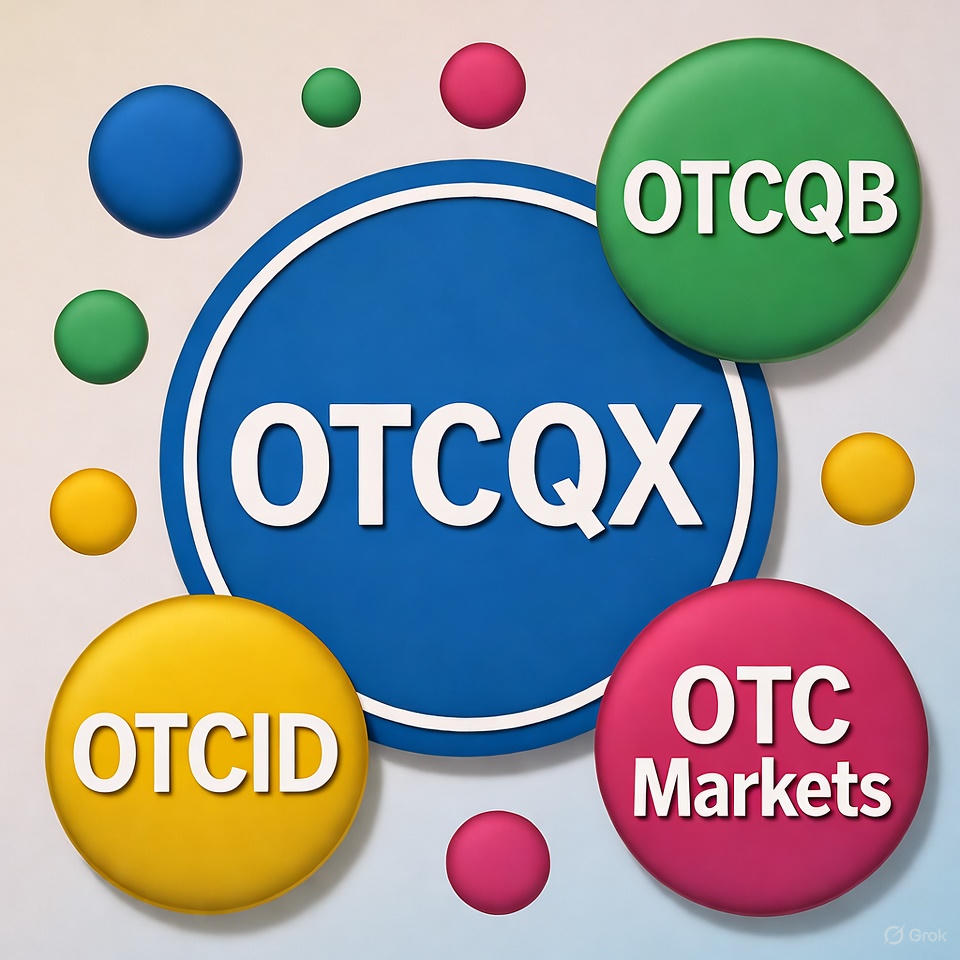
The OTC Markets Group operates the primary trading platform for thousands of public companies outside the Nasdaq and the NYSE. Its three main tiers—OTCQX, OTCQB, and OTCID (formerly OTC Pink)—serve issuers at different stages of growth and compliance readiness. Selecting the correct tier can impact investor perception, liquidity, and long-term uplisting potential.
The Structure of OTC Markets
Each tier of the OTC Markets represents a specific combination of disclosure obligations, financial standards, and oversight requirements. Below is an overview of their general characteristics:
- OTCQX – Designed for established, investor-ready companies meeting high governance and audit standards.
- OTCQB – Serves early-stage or growth companies building trading history and compliance discipline.
- OTCID – Entry-level tier for issuers maintaining current or basic information under Rule 15c2-11.
OTCQX: The Premium Tier
The OTCQX Best Market is the top tier of the OTC Markets, built for established issuers that meet rigorous financial and governance criteria. Foreign issuers often qualify through Rule 12g3-2(b) using filings from home-country exchanges.
- Minimum bid price of $5.00 per share.
- Audited financials by a PCAOB-registered or IFRS auditor.
- Compliance with U.S. or home-country reporting standards.
- Appointment of an OTCQX Advisor or Sponsor.
- Exclusion of shell companies or penny stocks.
Estimated costs range from $25,000 to $30,000 annually, including application and advisor fees.
OTCQB: The Venture Market
The OTCQB Venture Market is tailored for growth-stage companies that do not yet qualify for OTCQX but seek credibility and structure. It provides a bridge between OTCID and national exchange listings.
- Minimum bid price of $0.01.
- Minimum of 50 beneficial shareholders and 10% public float.
- Annual verification through OTCIQ with CEO/CFO certification.
- Audited GAAP or IFRS financial statements required.
Typical annual cost: approximately $15,000 plus any required attorney letters.
OTCID: The Disclosure-Based Market
The OTCID Market, replacing the former OTC Pink, is designed for companies that do not meet OTCQX or OTCQB disclosure levels but maintain current information under Rule 15c2-11. It includes sub-tiers for Current, Limited, and No Information categories.
- Current Information – full financials, manager’s certification, public disclosures.
- Limited Information – minimal data for transitional or inactive issuers.
- Expert Market – restricted to broker-dealer and institutional trading only.
The OTCID tier allows direct interaction with OTC Markets staff for information reviews and is often used by smaller or foreign issuers as a cost-effective quotation platform.
Key Decision Factors
- OTCQX requires the highest governance and financial reporting standards.
- OTCQB is suited for companies building market presence and compliance maturity.
- OTCID offers flexible entry-level disclosure at the lowest cost.
- Issuer resources, investor base, and growth trajectory determine optimal tier selection.
Strategic Considerations
- Capital-raising objectives and investor base influence tier choice.
- OTCQX offers institutional credibility; OTCQB suits retail and emerging issuers.
- OTCID provides a stepping stone for pre-reporting or restructuring companies.
- Non-U.S. issuers may combine MJDS and Rule 12g3-2(b) for OTCQX International access.
Conclusion
Selecting the appropriate OTC Markets tier requires evaluating cost, disclosure capability, and strategic goals. OTCQX serves as the premium market for established companies, OTCQB as a structured path for growth issuers, and OTCID as the accessible disclosure-based market for early-stage or non-reporting companies. Hamilton & Associates Law Group assists issuers with tier selection, Rule 15c2-11 compliance, and uplisting strategies to national exchanges.
If you have questions about taking your company public on the OTC Markets or would like to speak with a Securities Attorney, Hamilton & Associates Law Group, P.A. is ready to help. Our Founder, Brenda Hamilton, is a nationally known and recognized securities attorney with over two decades of experience assisting issuers worldwide with going public on the Nasdaq, NYSE, and OTC Markets. Since 1998, Ms. Hamilton has been a leading voice in corporate and securities law, representing both domestic and international clients across diverse industries and jurisdictions. Whether you are taking your company public, raising capital, navigating regulatory challenges, or entering new markets, Brenda Hamilton and her team deliver the experience, strategic insight, and results-driven representation you need to succeed.
To speak with a Securities Attorney, please contact Brenda Hamilton at 200 E Palmetto Rd, Suite 103, Boca Raton, Florida, (561) 416-8956, or by email at info@securitieslawyer101.com.
Hamilton & Associates | Securities Attorneys
Brenda Hamilton, Securities Attorney
200 E Palmetto Rd, Suite 103
Boca Raton, Florida 33432
Telephone: (561) 416-8956
Facsimile: (561) 416-2855
www.SecuritiesLawyer101.com